
Overview
Redesigning the entire moviegoing journey—not just ticket checkout.
Showboat is a responsive web and app concept built around a simple service promise: let guests preview movies, buy tickets and concessions, choose preferences, and arrive ready to enjoy the film.
The experience problem crossed digital and physical touchpoints. Moviegoers struggled to find information, felt rushed during purchases at the theater, and sometimes abandoned food or ticket transactions because of queues.
Experience goal: Tickets, concessions, parking, and accessibility preferences in one understandable flow.
Portfolio context: This is a concept redesign intended to demonstrate service thinking, responsive interaction design, and accessibility considerations.
Process
Connect the moments before, during, and after arrival.
Personas and journey mapping helped reveal that the “line problem” was really a coordination problem across discovery, purchase, arrival, concessions, and viewing preferences.
Frame
Clarify the user, context, constraint, and decision.
Learn
Build evidence through research and journey analysis.
Make
Explore flows, wireframes, and interactive prototypes.
Validate
Test, identify friction, and revise the experience.
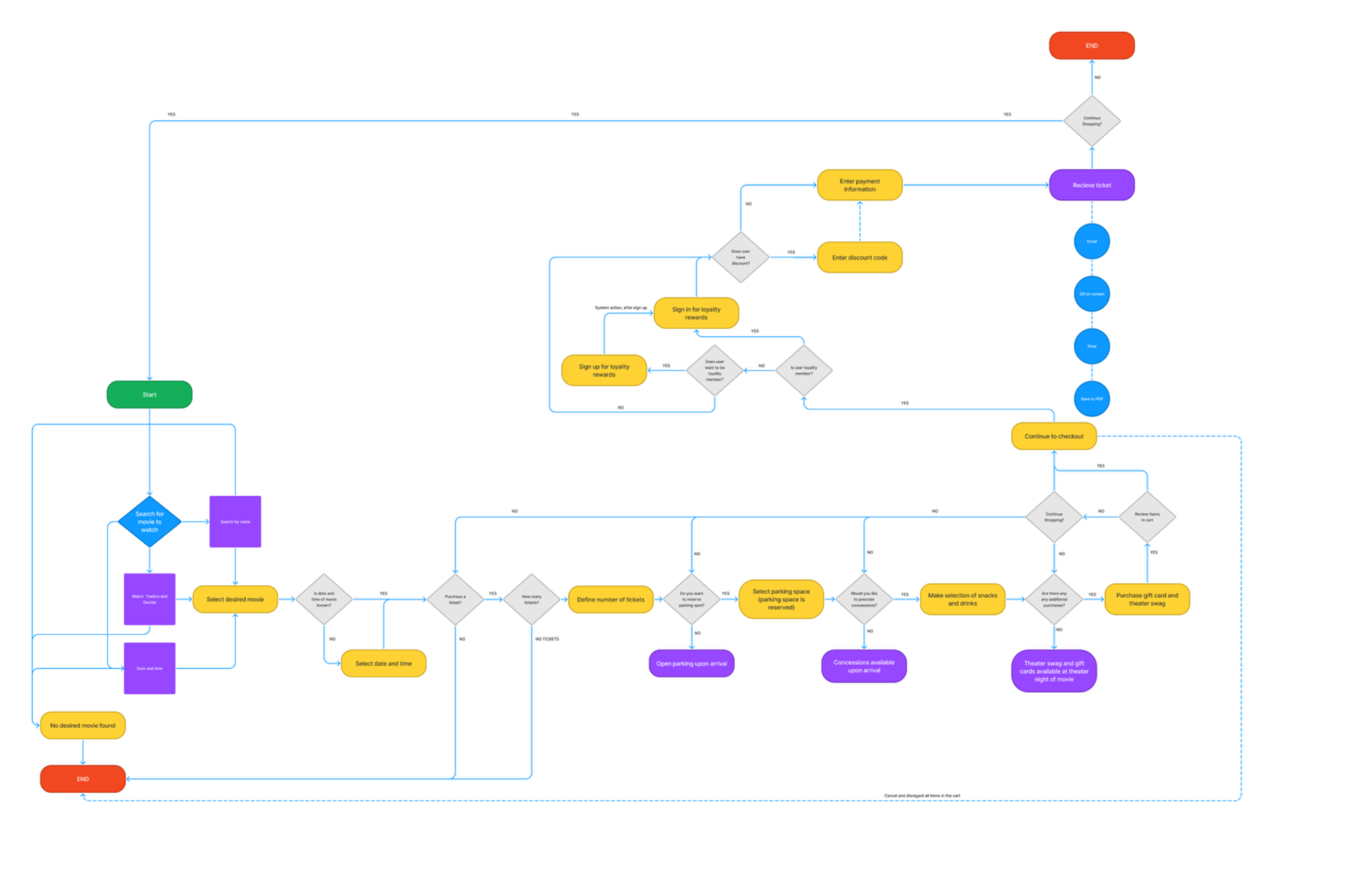
Final experience
One visual system across the full night out.
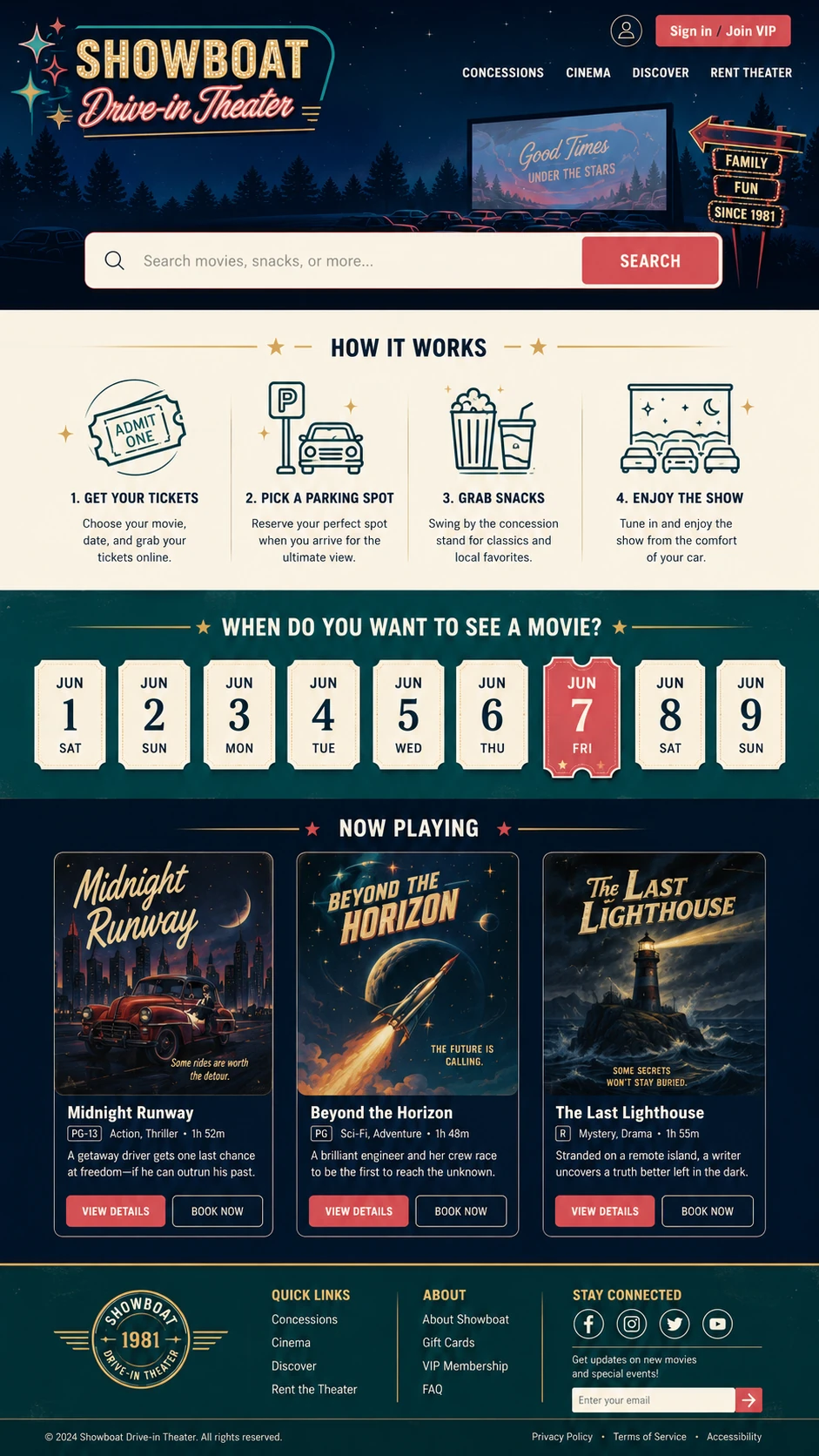
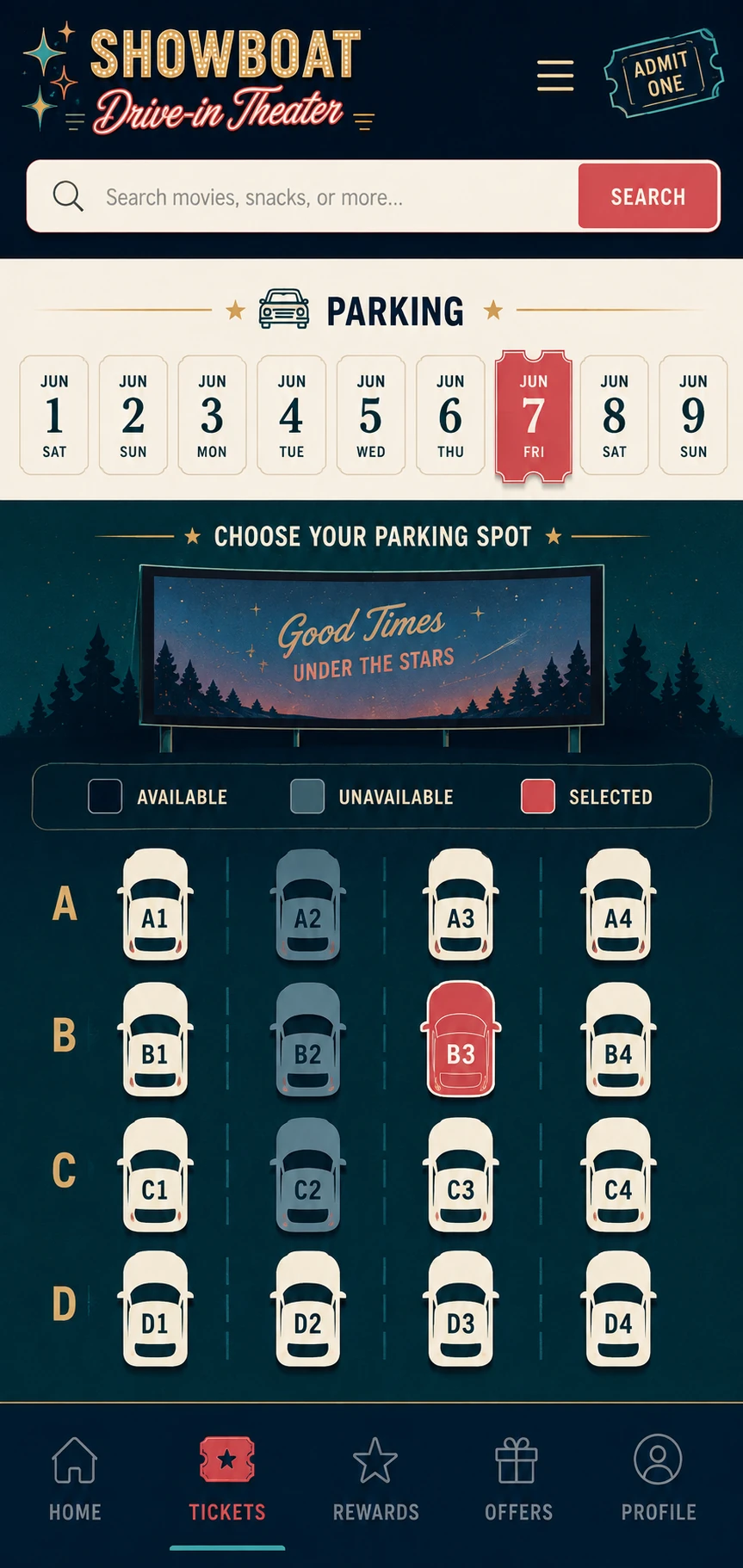
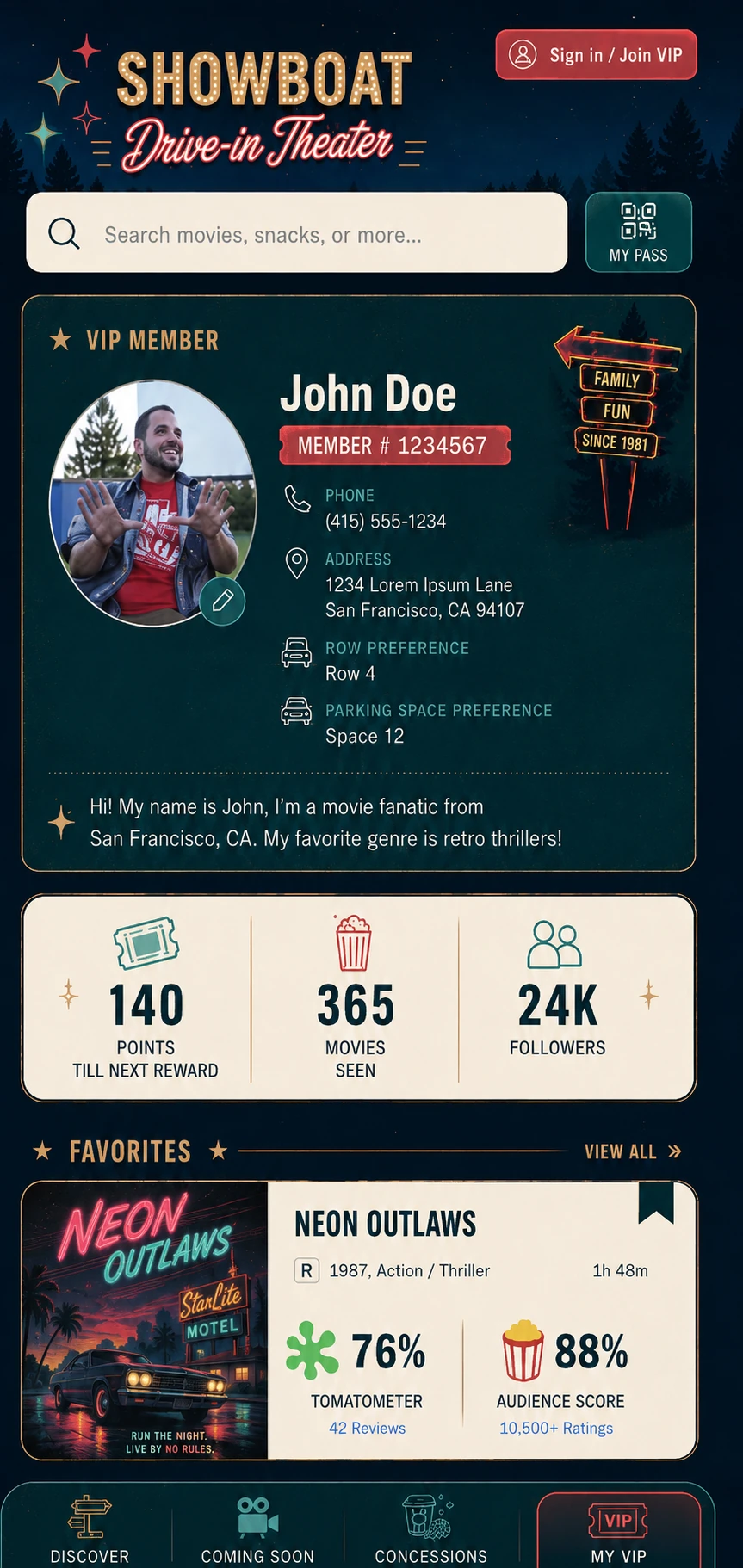
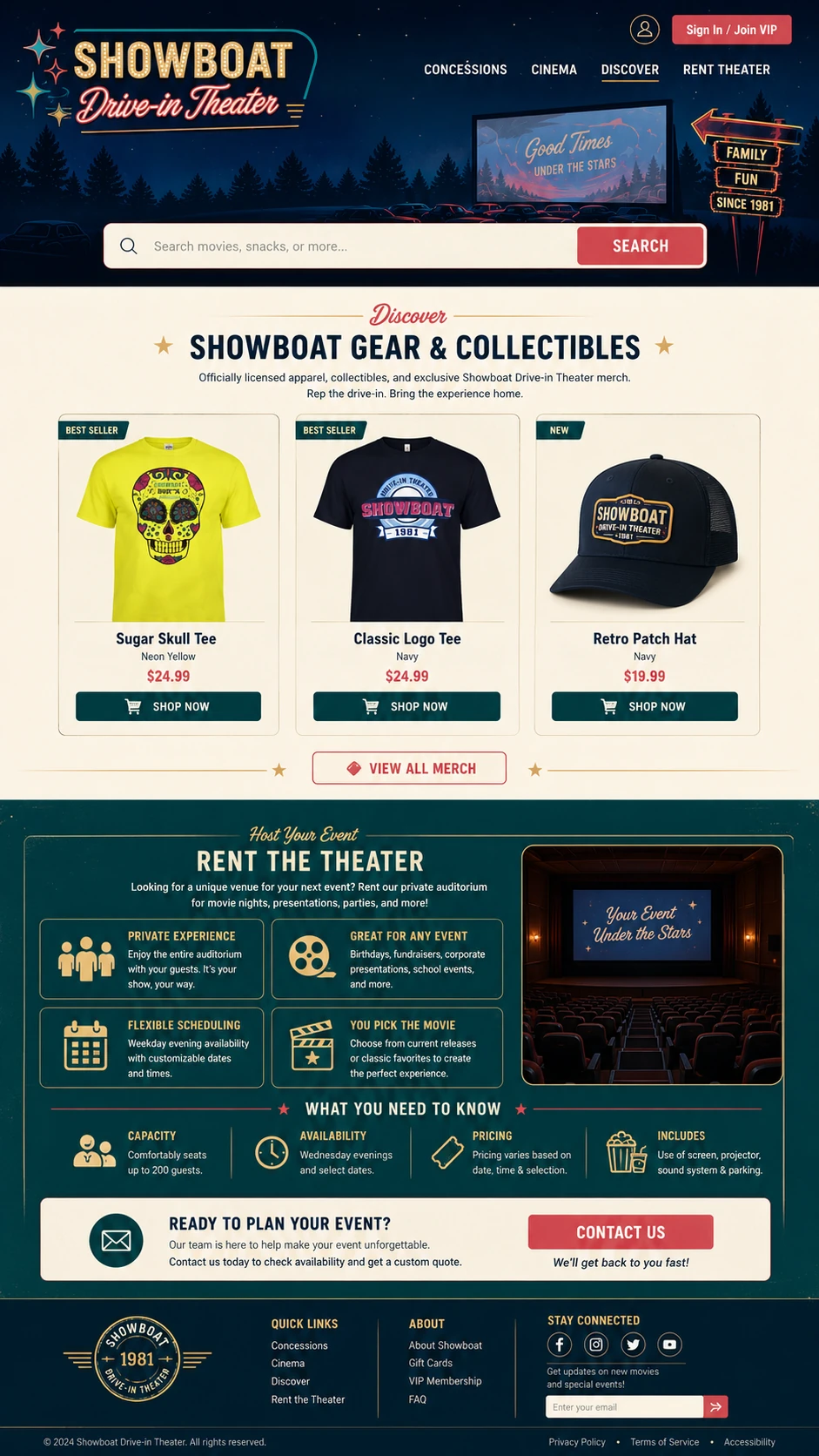
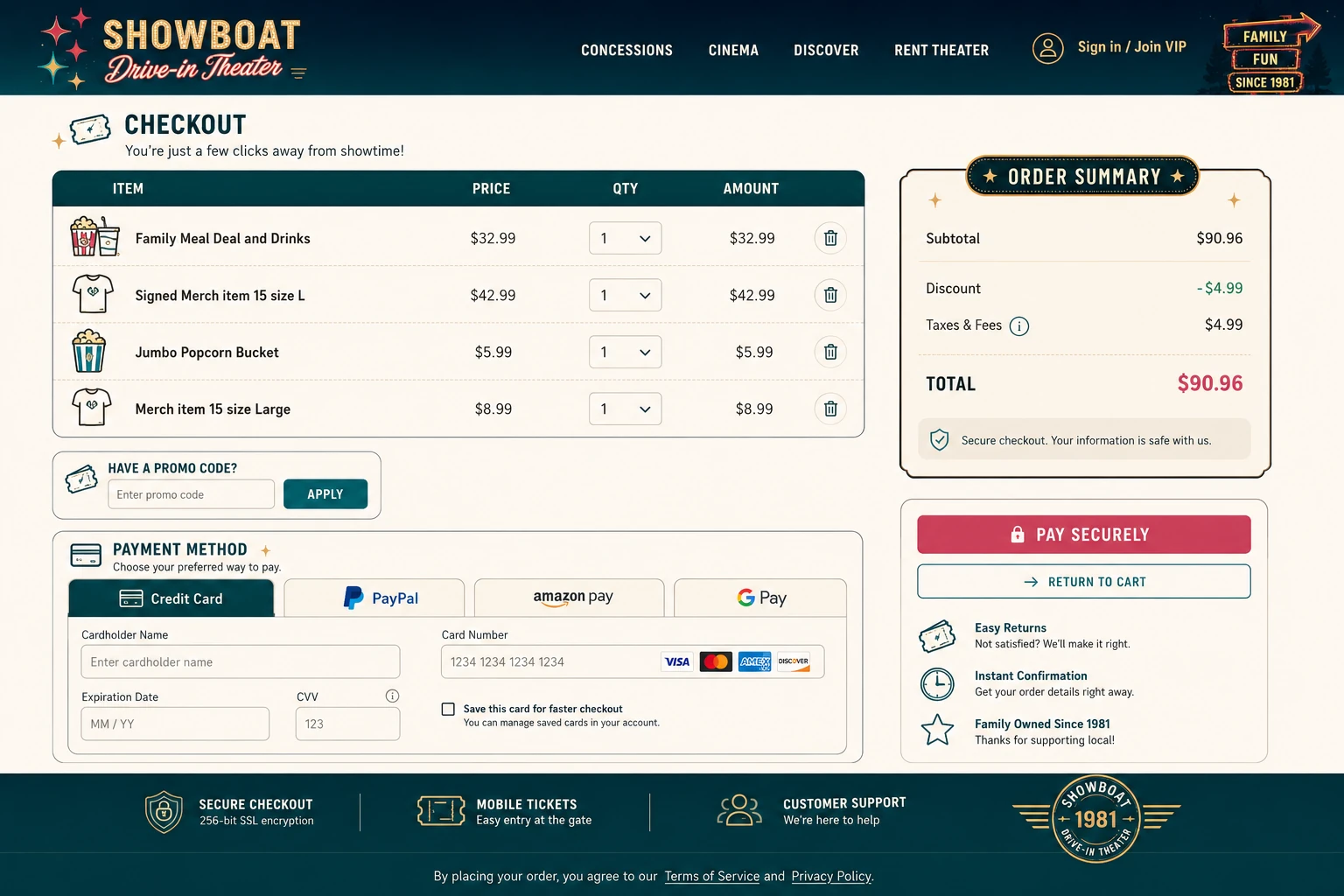
The high-fidelity direction carries the same drive-in identity across discovery, arrival planning, membership, secondary services, and checkout while keeping each task easy to scan.
Research insights
The strongest pain points lived between channels.
Information was hard to locate
Users could not easily find details about the films they wanted to see.
Purchasing felt rushed
At-theater transactions created pressure, especially for families managing multiple needs.
Queues reduced revenue and enjoyment
Long lines made guests irritable and led some to abandon tickets or concessions.
Design decisions
Let people build the night before they enter the lot.
Lead with what is playing
Make movie discovery, time, screen, rating, and accessibility information immediately scannable.
Unify the transaction
Combine tickets, concessions, merchandise, and reservation details in a single progressive flow.
Capture preferences early
Allow parking, subtitles, captioning, and related needs to be selected before arrival.
Design the handoff to the physical venue
Provide clear confirmation, arrival instructions, pickup status, and what to expect next.
Accessibility
Personalization should include access needs by default.
The concept brings captions, subtitles, descriptions, and parking preferences into the main booking path rather than hiding them in a separate help area. A production version would require testing with disabled moviegoers, venue staff, and families using a range of devices and assistive technologies.
Reflection
Service design changes what counts as the product.
The interface is not finished when payment succeeds. The experience continues through arrival, parking, food pickup, playback setup, support, and departure.
The leadership opportunity is to align digital product, venue operations, commerce, and accessibility around one end-to-end journey.